At the skin surface
KPV in cultured skin cells
Skin is the obvious stop for this name. The experiments make a more particular stop: keratinocytes grown in culture.
Alpha-MSH-related signalling in keratinocytes
Keratinocytes are cells of the skin’s outer layer. A paper on alpha-MSH, MSH 11-13 KPV and ACTH signalling examined human keratinocyte cells. In these cultured skin-relevant systems, the KPV fragment reproduced anti-inflammatory signalling associated with the full hormone.
I enjoy seeing the relatives considered together here, after the macrophage paper gave them different cytokine results. It is a reminder to attach the tissue and the test to the family resemblance. Human-derived cells give this experiment a human cellular setting; an intact person’s skin would bring another set of questions.
The fine-dust experiment
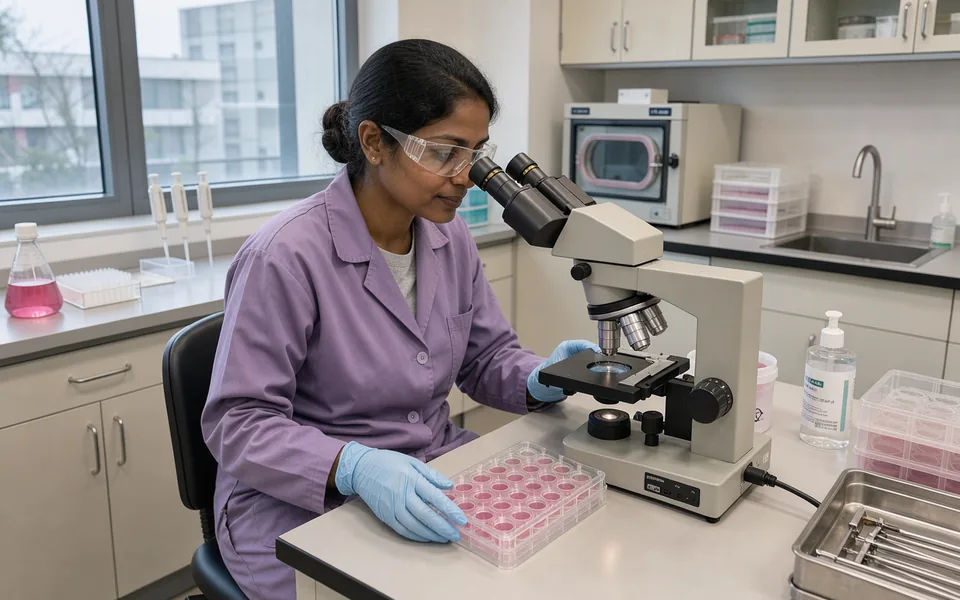
A later fine-dust experiment in human keratinocytes reported reduced particulate-matter-induced apoptosis and inflammatory signalling with KPV. Apoptosis means programmed cell death. Here the injury came from a specific environmental challenge applied to cells in vitro.
The paper’s appeal lies in that precise injury. The experiment asks how cells respond to fine-dust injury and measures changes in that response. It supplies a reason to investigate further, while leaving open whether a preparation applied to living skin could produce a useful effect. Instructions for a cosmetic routine would demand evidence beyond the culture-medium result.
The fine-dust paper concerns human keratinocytes in vitro. The injury response is the measured outcome that matters here.
Pigmentation and inflammation
The review of alpha-MSH and related tripeptides describes KPV’s anti-inflammatory activity without the full hormone’s pigmentary action in the reviewed in-vitro and animal studies. That distinction helps explain why a peptide related to a pigmentation hormone appears in these inflammation experiments.
I like this branch of the family precisely because the obvious association—colour—gives way to a more specific cellular question. The inflammatory-cell essay returns to that question in macrophages and intestinal cells, with a different pattern of results.