A related tripeptide
KdPT and intestinal barriers
A close neighbour deserves its own address. The barrier experiment here tested KdPT.
The KdPT experiment
KdPT reduced experimental colitis and preserved intestinal barrier function in a study involving mice and intestinal epithelial cells. The paper identifies the tripeptide in its title, and that name matters throughout the result. That small naming distinction deserves my fussiness.
Barrier function concerns the intestinal lining’s ability to maintain a boundary. This study brings that boundary into the outcome, alongside inflammation. It is a useful expansion of the question: a quieter inflammatory response and a preserved barrier are different things to measure, even when both interest the same reader.
KdPT is the tested tripeptide in the barrier paper. Filing it under a better-known neighbour’s name would lose the distinction I value.
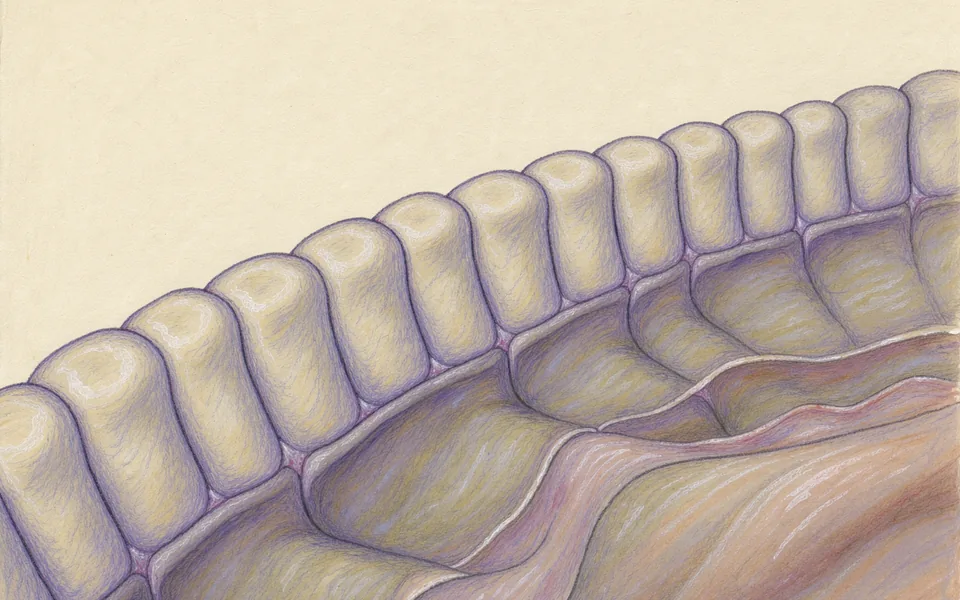
KPV’s colitis findings alongside it
For comparison, a KPV mouse colitis study reported earlier recovery, stronger regain of body weight, reduced inflammatory infiltrate and lower myeloperoxidase activity in the DSS model. The PepT1 paper also reported reduced severity of chemically induced colitis in mice, together with uptake and signalling experiments in cultured cells.
Placed beside the KdPT paper, these results describe a cluster of related investigations. They do not provide a direct comparison that ranks KdPT against KPV. The comparison missing from this group of papers would test the relatives under the same conditions. Until then, I have a cluster of experiments rather than a ranking.
The human question
The KdPT study gives me mice and intestinal epithelial cells to think about. The KPV colitis study gives me mouse models. Those settings are exactly where these findings are useful. A person’s expected benefit, side-effect risk or treatment plan remains beyond the reach of these findings.
The attraction of a small peptide family is the chance to compare closely related experiments. Letting the names merge would throw away that opportunity. The microbial experiments make the naming problem even sharper, because the preparation there can become a synthetic dimer.